


262% Surge in China's Diesel Exports; Changing Refining Market Dynamics Amid Middle Eastern Tensions
Subheadline: China's petroleum product exports increased in September; but is this growth a sign of refinery overproduction or a reaction to changing global market conditions?
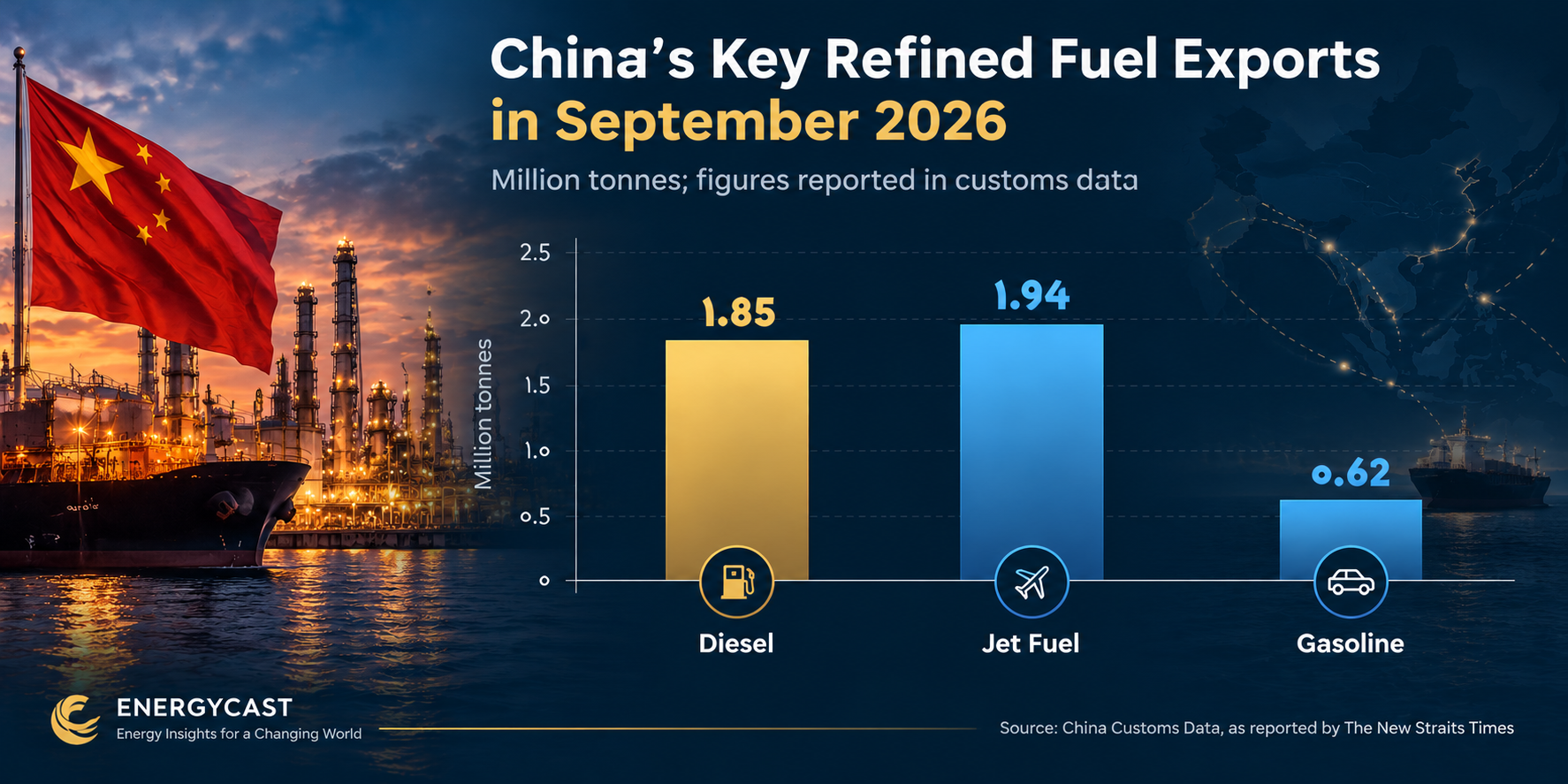
China's diesel exports in September 2026 reached 1.85 million tons, with a year-on-year growth of 262.3%. The easing of China's export restrictions and the shortage of petroleum products in the global market are key factors influencing this development. However, total refined product exports from China in the first nine months of the year have decreased by 3.7% compared to the previous year.
China's return to the fuel export market; monthly growth or trend change?
According to EnergyCast, China's customs data shows that the total exports of refined products from the country reached 7.16 million tons in September, which is 19 percent higher than the previous month and 39.4 percent higher than September of last year. Among these, diesel recorded the highest relative jump.
However, examining a longer timeframe presents a different picture. The total exports of refined products from China in the first 9 months of 2026 reached 41.4 million tons,which is 3.7 percent lower than the same period last year.Therefore, the jump in September cannot be solely seen as a sign of sustainable export growth for the entire year.
Why did diesel grow more than gasoline?
In September, China's diesel exports increased by 262.3 percent, while gasoline exports decreased by 4.1 percent to 620,000 tons. Jet fuel exports also rose by 16.7 percent to 1.94 million tons.
This difference indicates that market conditions for all petroleum products are not the same. Diesel has widespread applications in heavy transport, industrial activities, and parts of the economy; whereas demand, pricing, and gasoline export policies are influenced by different factors.
The growth in diesel exports could be the result of a combination of foreign demand, changes in export restrictions, and refinery decisions to seize trading opportunities. However, export volume data alone is not sufficient to determine the contribution of each factor.
The role of war and supply disruptions in Beijing's decisions
In March, China imposed restrictions on petroleum product exports to safeguard domestic supply against risks arising from Middle Eastern conflicts. Then in July, some of these restrictions were eased.
This policy change is significant; as China can influence the volume of fuel available in regional markets through the regulation of export licenses.
In a market where the supply from Middle Eastern and Russian refineries is under pressure, an increase in Chinese exports could help alleviate some of the product shortages. However, such an effect does not necessarily mean an immediate reduction in consumer prices; transportation costs, insurance, distribution, and destination market conditions also matter.
Implications for the Asian market and regional refineries
Asian markets are among the most important destinations for China's petroleum product trade. An increase in diesel supply could intensify competition among regional exporters and affect refinery profit margins.
For crude oil importing refineries, the price of diesel relative to feedstock costs is one of the determining variables for profitability. An increase in Chinese exports may reduce pressure on diesel prices in some markets, but if crude oil prices or transportation costs remain high simultaneously, the effects will be limited.
Will the export surge continue in October?
The continuation of export growth is not certain. A report from S&P Global on October 9 indicates that China's light product exports resumed after a brief halt during the national holidays, but market participants expected October's export volume to be lower than September's.
This indicates that China's export policy remains flexible and dependent on domestic supply conditions and the global market.
Potential implications for Iran
For Iran's refining industry, the increase in China's diesel exports can be examined from two perspectives: first, its impact on regional product prices, and second, changes in trading opportunities in Asian markets.
However, without reliable information on selling prices, export volumes, and delivery costs of Iranian products, it is not possible to calculate the direct effect of China's export surge on Iran's refining revenues.
The surge in China's diesel exports in September 2026 highlights the significant role of Beijing's export policy in the petroleum product market. Despite a more than threefold increase in diesel exports compared to the previous year, the decline in total product exports in the first 9 months of the year indicates that the long-term trend is still volatile.
For the global refining market, the main question is how much and for how long China will continue to increase export supply; not just how much diesel exports have grown in a single month.
- #نفت